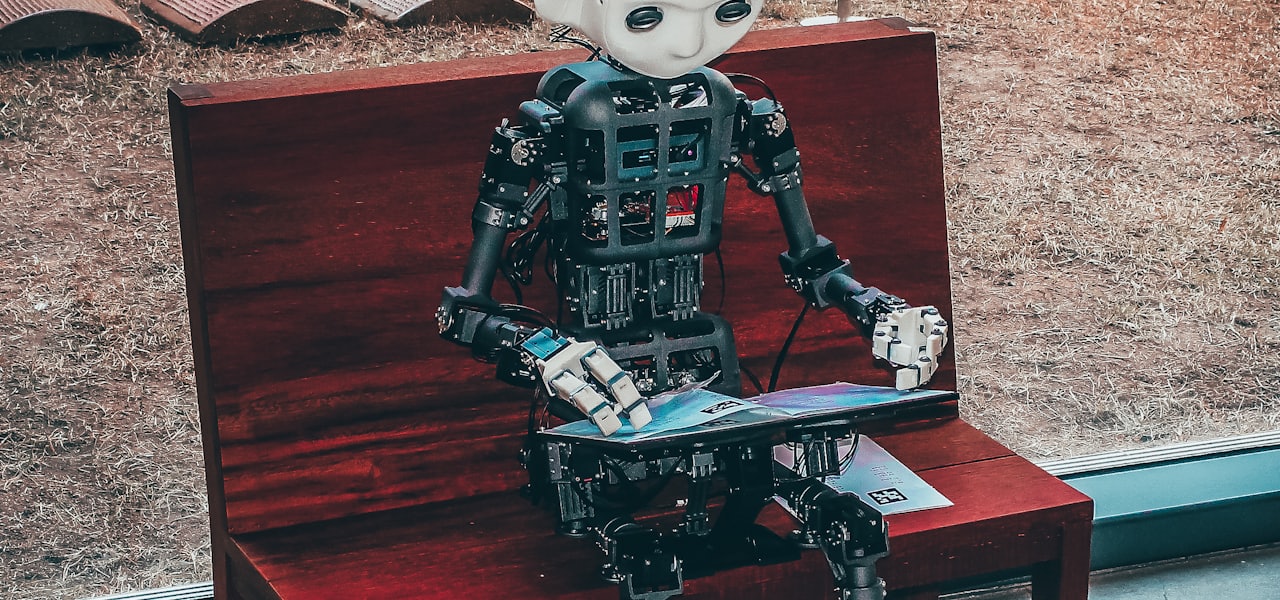
A smart object is an object that enhances the interaction with not only people but also with other smart objects. Also known as smart connected products or smart connected things (SCoT), they are products, assets and other things embedded with processors, sensors, software and connectivity that allow data to be exchanged between the product and its environment, manufacturer, operator/user, and other products and systems. Connectivity also enables some capabilities of the product to exist outside the physical device, in what is known as the product cloud. The data collected from these products can be then analysed to inform decision-making, enable operational efficiencies and continuously improve the performance of the product. It can not only refer to interaction with physical world objects but also to interaction with virtual (computing environment) objects. A smart physical object may be created either as an artifact or manufactured product or by embedding electronic tags such as RFID tags or sensors into non-smart physical objects. Smart virtual objects are created as software objects that are intrinsic when creating and operating a virtual or cyber world simulation or game. The concept of a smart object has several origins and uses, see History. There are also several overlapping terms, see also smart device, tangible object or tangible user interface and Thing as in the Internet of things. == History == In the early 1990s, Mark Weiser, from whom the term ubiquitous computing originated, referred to a vision "When almost every object either contains a computer or can have a tab attached to it, obtaining information will be trivial", Although Weiser did not specifically refer to an object as being smart, his early work did imply that smart physical objects are smart in the sense that they act as digital information sources. Hiroshi Ishii and Brygg Ullmer refer to tangible objects in terms of tangibles bits or tangible user interfaces that enable users to "grasp & manipulate" bits in the center of users' attention by coupling the bits with everyday physical objects and architectural surfaces. The smart object concept was introduced by Marcelo Kallman and Daniel Thalmann as an object that can describe its own possible interactions. The main focus here is to model interactions of smart virtual objects with virtual humans, agents, in virtual worlds. The opposite approach to smart objects is 'plain' objects that do not provide this information. The additional information provided by this concept enables far more general interaction schemes, and can greatly simplify the planner of an artificial intelligence agent. In contrast to smart virtual objects used in virtual worlds, Lev Manovich focuses on physical space filled with electronic and visual information. Here, "smart objects" are described as "objects connected to the Net; objects that can sense their users and display smart behaviour". More recently in the early 2010s, smart objects are being proposed as a key enabler for the vision of the Internet of things. The combination of the Internet and emerging technologies such as near field communications, real-time localization, and embedded sensors enables everyday objects to be transformed into smart objects that can understand and react to their environment. Such objects are building blocks for the Internet of things and enable novel computing applications. In 2018, one of the world's first smart houses was built in Klaukkala, Finland in the form of a five-floor apartment block, using the Kone Residential Flow solution created by KONE, allowing even a smartphone to act as a home key. == Characteristics == Although we can view interaction with physical smart object in the physical world as distinct from interaction with virtual smart objects in a virtual simulated world, these can be related. Poslad considers the progression of: how humans use models of smart objects situated in the physical world to enhance human to physical world interaction; versus how smart physical objects situated in the physical world can model human interaction in order to lessen the need for human to physical world interaction; versus how virtual smart objects by modelling both physical world objects and modelling humans as objects and their subsequent interactions can form a predominantly smart virtual object environment. === Smart physical objects === The concept smart for a smart physical object simply means that it is active, digital, networked, can operate to some extent autonomously, is reconfigurable and has local control of the resources it needs such as energy, data storage, etc. Note, a smart object does not necessarily need to be intelligent as in exhibiting a strong essence of artificial intelligence—although it can be designed to also be intelligent. Physical world smart objects can be described in terms of three properties: Awareness: is a smart object's ability to understand (that is, sense, interpret, and react to) events and human activities occurring in the physical world. Representation: refers to a smart object's application and programming model—in particular, programming abstractions. Interaction: denotes the object's ability to converse with the user in terms of input, output, control, and feedback. Based upon these properties, these have been classified into three types: Activity-Aware Smart Objects: Are objects that can record information about work activities and its own use. Policy-Aware Smart Objects: Are objects that are activity-aware Objects can interpret events and activities with respect to predefined organizational policies. Process-Aware Smart Objects: Processes play a fundamental role in industrial work management and operation. A process is a collection of related activities or tasks that are ordered according to their position in time and space. === Smart virtual objects === For the virtual object in a virtual world case, an object is called smart when it has the ability to describe its possible interactions. This focuses on constructing a virtual world using only virtual objects that contain their own interaction information. There are four basic elements to constructing such a smart virtual object framework. Object properties: physical properties and a text description Interaction information: position of handles, buttons, grips, and the like Object behavior: different behaviors based on state variables Agent behaviors: description of the behavior an agent should follow when using the object Some versions of smart objects also include animation information in the object information, but this is not considered to be an efficient approach, since this can make objects inappropriately oversized. === Categorization === The terms smart, connected product or smart product can be confusing as it is used to cover a broad range of different products, ranging from smart home appliances (e.g., smart bathroom scales or smart light bulbs) to smart cars (e.g., Tesla). While these products share certain similarities, they often differ substantially in their capabilities. Raff et al. developed a conceptual framework that distinguishes different smart products based on their capabilities, which features 4 types of smart product archetypes (in ascending order of "smartness"). Digital Connected Responsive Intelligent == Advantages == Smart, connected products have three primary components: Physical – made up of the product's mechanical and electrical parts. Smart – made up of sensors, microprocessors, data storage, controls, software, and an embedded operating system with enhanced user interface. Connectivity – made up of ports, antennae, and protocols enabling wired/wireless connections that serve two purposes, it allows data to be exchanged with the product and enables some functions of the product to exist outside the physical device. Each component expands the capabilities of one another resulting in "a virtuous cycle of value improvement". First, the smart components of a product amplify the value and capabilities of the physical components. Then, connectivity amplifies the value and capabilities of the smart components. These improvements include: Monitoring of the product's conditions, its external environment, and its operations and usage. Control of various product functions to better respond to changes in its environment, as well as to personalize the user experience. Optimization of the product's overall operations based on actual performance data, and reduction of downtimes through predictive maintenance and remote service. Autonomous product operation, including learning from their environment, adapting to users' preferences and self-diagnosing and service. === The Internet of things (IoT) === The Internet of things is the network of physical objects that contain embedded technology to communicate and sense or interact with their internal states or the external environment. The phrase "Internet of things" reflects the gro
Elasticity (data store)
The elasticity of a data store relates to the flexibility of its data model and clustering capabilities. The greater the number of data model changes that can be tolerated, and the more easily the clustering can be managed, the more elastic the data store is considered to be. == Types == === Clustering elasticity === Clustering elasticity is the ease of adding or removing nodes from the distributed data store. Usually, this is a difficult and delicate task to be done by an expert in a relational database system. Some NoSQL data stores, like Apache Cassandra have an easy solution, and a node can be added/removed with a few changes in the properties and by adding specifying at least one seed. === Data-modelling elasticity === Relational databases are most often very inelastic, as they have a predefined data model that can only be adapted through redesign. Most NoSQL data stores, however, do not have a fixed schema. Each row can have a different number and even different type of columns. Concerning the data store, modifications in the schema are no problem. This makes this kind of data stores more elastic concerning the data model. The drawback is that the programmer has to take into account that the data model may change over time.
Outline of artificial intelligence
The following outline is provided as an overview of and topical guide to artificial intelligence: Artificial intelligence (AI) is intelligence exhibited by machines or software. It is also the name of the scientific field which studies how to create computers and computer software that are capable of intelligent behavior. == AI terminology == Glossary of artificial intelligence == Goals and applications == === General intelligence === Artificial general intelligence AI-complete === Reasoning and problem solving === Automated reasoning Mathematics Automated theorem prover Computer-assisted proof – Computer algebra General Problem Solver Expert system – Decision support system – Clinical decision support system – === Knowledge representation === Knowledge representation Knowledge management Cyc === Planning === Automated planning and scheduling Strategic planning Sussman anomaly – === Learning === Machine learning – Constrained Conditional Models – Deep learning – Neural modeling fields – Supervised learning – Weak supervision (semi-supervised learning) – Unsupervised learning – === Natural language processing === Natural language processing (outline) – Chatterbots – Language identification – Large language model – Retrieval-augmented generation – Natural language user interface – Natural language understanding – Machine translation – Statistical semantics – Question answering – Semantic translation – Concept mining – Data mining – Text mining – Process mining – E-mail spam filtering – Information extraction – Named-entity extraction – Coreference resolution – Named-entity recognition – Relationship extraction – Terminology extraction – === Perception === Machine perception Pattern recognition – Computer Audition – Speech recognition – Speaker recognition – Computer vision (outline) – Image processing Intelligent word recognition – Object recognition – Optical mark recognition – Handwriting recognition – Optical character recognition – Automatic number plate recognition – Information extraction – Image retrieval – Automatic image annotation – Facial recognition systems – Silent speech interface – Activity recognition – Percept (artificial intelligence) === Robotics === Robotics – Behavior-based robotics – Cognitive – Cybernetics – Developmental robotics – Evolutionary robotics – === Control === Intelligent control Self-management (computer science) – Autonomic Computing – Autonomic Networking – === Social intelligence === Affective computing Kismet === Game playing === Game artificial intelligence – Computer game bot – computer replacement for human players. Video game AI – Computer chess – Computer Go – General game playing – General video game playing – === Creativity, art and entertainment === Artificial creativity Artificial life Artificial intelligence art AI anthropomorphism AI agent AI web browser AI boom AI slop Creative computing Generative artificial intelligence Generative pre trained transformer Uncanny valley Music and artificial intelligence Computational humor Chatbot === Integrated AI systems === AIBO – Sony's robot dog. It integrates vision, hearing and motorskills. Asimo (2000 to present) – humanoid robot developed by Honda, capable of walking, running, negotiating through pedestrian traffic, climbing and descending stairs, recognizing speech commands and the faces of specific individuals, among a growing set of capabilities. MIRAGE – A.I. embodied humanoid in an augmented reality environment. Cog – M.I.T. humanoid robot project under the direction of Rodney Brooks. QRIO – Sony's version of a humanoid robot. TOPIO, TOSY's humanoid robot that can play ping-pong with humans. Watson (2011) – computer developed by IBM that played and won the game show Jeopardy! It is now being used to guide nurses in medical procedures. Purpose: Open domain question answering Technologies employed: Natural language processing Information retrieval Knowledge representation Automated reasoning Machine learning Project Debater (2018) – artificially intelligent computer system, designed to make coherent arguments, developed at IBM's lab in Haifa, Israel. === Intelligent personal assistants === Intelligent personal assistant – Amazon Alexa – Assistant – Braina – Cortana – Google Assistant – Google Now – Mycroft – Siri – Viv – === Other applications === Artificial life – simulation of natural life through the means of computers, robotics, or biochemistry. Automatic target recognition – Diagnosis (artificial intelligence) – Speech generating device – Vehicle infrastructure integration – Virtual Intelligence – == History == History of artificial intelligence Progress in artificial intelligence Timeline of artificial intelligence AI effect – as soon as AI successfully solves a problem, the problem is no longer considered by the public to be a part of AI. This phenomenon has occurred in relation to every AI application produced, so far, throughout the history of development of AI. AI winter – a period of disappointment and funding reductions occurring after a wave of high expectations and funding in AI. Such funding cuts occurred in the 1970s, for instance. Moore's law === History by period === 2017 in artificial intelligence 2018 in artificial intelligence 2019 in artificial intelligence 2020 in artificial intelligence 2021 in artificial intelligence 2022 in artificial intelligence 2023 in artificial intelligence 2024 in artificial intelligence 2025 in artificial intelligence 2026 in artificial intelligence 2027 in artificial intelligence 2028 in artificial intelligence 2029 in artificial intelligence === History by subject === History of logic (formal reasoning is an important precursor of AI) History of machine learning (timeline) History of machine translation (timeline) History of natural language processing History of optical character recognition (timeline) == AI algorithms and techniques == === Search === Discrete search algorithms Uninformed search Brute force search – Problem-solving technique and algorithmic paradigmPages displaying short descriptions of redirect targets Search tree – Data structure in tree form sorted for fast lookup Breadth-first search – Algorithm to search the nodes of a graph Depth-first search – Algorithm to search the nodes of a graph State space search – Class of search algorithmsPages displaying short descriptions of redirect targets Informed search Best-first search – Graph exploring search algorithm A search algorithm – Algorithm used for pathfinding and graph traversal Heuristics – Problem-solving methodPages displaying short descriptions of redirect targets Pruning (algorithm) – Data compression techniquePages displaying short descriptions of redirect targets Adversarial search Minmax algorithm – Decision rule used for minimizing the possible loss for a worst-case scenarioPages displaying short descriptions of redirect targets Logic as search Production system (computer science) – Computer program used to provide artificial intelligence Rule based system – Type of computer systemPages displaying short descriptions of redirect targets Production rule – Computer program used to provide artificial intelligence Inference rule – Method of deriving conclusionsPages displaying short descriptions of redirect targets Horn clause – Type of logical formula Forward chaining – Inference engine in an expert system Backward chaining – Method of forming inferences Planning as search State space search – Class of search algorithmsPages displaying short descriptions of redirect targets Means–ends analysis – Problem solving technique === Optimization search === Optimization (mathematics) algorithms Hill climbing – Optimization algorithm Simulated annealing – Probabilistic optimization technique and metaheuristic Beam search – Heuristic search algorithm Random optimization – Optimization technique in mathematics Evolutionary computation Genetic algorithms – Competitive algorithm for searching a problem spacePages displaying short descriptions of redirect targets Gene expression programming – Evolutionary algorithm Genetic programming – Evolving computer programs with techniques analogous to natural genetic processes Differential evolution – Method of mathematical optimization Society based learning algorithms. Swarm intelligence – Collective behavior of decentralized, self-organized systems Particle swarm optimization – Iterative simulation method Ant colony optimization – Optimization algorithmPages displaying short descriptions of redirect targets Metaheuristic – Optimization technique === Logic === Logic and automated reasoning Programming using logic Logic programming – Programming paradigm based on formal logic See "Logic as search" above. Forms of Logic Propositional logic First-order logic First-order logic with equality Constraint satisfaction – Process in artificial intelligence and operations research Fuzzy logic Fuzzy set theory – Sets whose elements have degrees of membershipPages displaying short descriptions
Information history
Information history may refer to the history of each of the categories listed below (or to combinations of them). It should be recognized that the understanding of, for example, libraries as information systems only goes back to about 1950. The application of the term information for earlier systems or societies is a retronym. == Academic discipline == Information history is an emerging discipline related to, but broader than, library history. An important introduction and review was made by Alistair Black (2006). A prolific scholar in this field is also Toni Weller, for example, Weller (2007, 2008, 2010a and 2010b). As part of her work Toni Weller has argued that there are important links between the modern information age and its historical precedents. A description from Russia is Volodin (2000). Alistair Black (2006, p. 445) wrote: "This chapter explores issues of discipline definition and legitimacy by segmenting information history into its various components: The history of print and written culture, including relatively long-established areas such as the histories of libraries and librarianship, book history, publishing history, and the history of reading. The history of more recent information disciplines and practice, that is to say, the history of information management, information systems, and information science. The history of contiguous areas, such as the history of the information society and information infrastructure, necessarily enveloping communication history (including telecommunications history) and the history of information policy. The history of information as social history, with emphasis on the importance of informal information networks." "Bodies influential in the field include the American Library Association’s Round Table on Library History, the Library History Section of the International Federation of Library Associations and Institutions (IFLA), and, in the U.K., the Library and Information History Group of the Chartered Institute of Library and Information Professionals (CILIP). Each of these bodies has been busy in recent years, running conferences and seminars, and initiating scholarly projects. Active library history groups function in many other countries, including Germany (The Wolfenbuttel Round Table on Library History, the History of the Book and the History of Media, located at the Herzog August Bibliothek), Denmark (The Danish Society for Library History, located at the Royal School of Library and Information Science), Finland (The Library History Research Group, University of Tamepere), and Norway (The Norwegian Society for Book and Library History). Sweden has no official group dedicated to the subject, but interest is generated by the existence of a museum of librarianship in Bods, established by the Library Museum Society and directed by Magnus Torstensson. Activity in Argentina, where, as in Europe and the U.S., a "new library history" has developed, is described by Parada (2004)." (Black (2006, p. 447). === Journals === Information & Culture (previously Libraries & the Cultural Record, Libraries & Culture) Library & Information History (until 2008: Library History; until 1967: Library Association. Library History Group. Newsletter) == Information technology (IT) == The term IT is ambiguous although mostly synonym with computer technology. Haigh (2011, pp. 432-433) wrote "In fact, the great majority of references to information technology have always been concerned with computers, although the exact meaning has shifted over time (Kline, 2006). The phrase received its first prominent usage in a Harvard Business Review article (Haigh, 2001b; Leavitt & Whisler, 1958) intended to promote a technocratic vision for the future of business management. Its initial definition was at the conjunction of computers, operations research methods, and simulation techniques. Having failed initially to gain much traction (unlike related terms of a similar vintage such as information systems, information processing, and information science) it was revived in policy and economic circles in the 1970s with a new meaning. Information technology now described the expected convergence of the computing, media, and telecommunications industries (and their technologies), understood within the broader context of a wave of enthusiasm for the computer revolution, post-industrial society, information society (Webster, 1995), and other fashionable expressions of the belief that new electronic technologies were bringing a profound rupture with the past. As it spread broadly during the 1980s, IT increasingly lost its association with communications (and, alas, any vestigial connection to the idea of anybody actually being informed of anything) to become a new and more pretentious way of saying "computer". The final step in this process is the recent surge in references to "information and communication technologies" or ICTs, a coinage that makes sense only if one assumes that a technology can inform without communicating". Some people use the term information technology about technologies used before the development of the computer. This is however to use the term as a retronym. =
Artificial intelligence in government
Artificial intelligence (AI) has a range of uses in government. It can be used to further public policy objectives (in areas such as emergency services, health and welfare), as well as assist the public to interact with the government (through the use of virtual assistants, for example). According to the Harvard Business Review, "Applications of artificial intelligence to the public sector are broad and growing, with early experiments taking place around the world." Hila Mehr from the Ash Center for Democratic Governance and Innovation at Harvard University notes that AI in government is not new, with postal services using machine methods in the late 1990s to recognise handwriting on envelopes to automatically route letters. The use of AI in government comes with significant benefits, including efficiencies resulting in cost savings (for instance by reducing the number of front office staff) and reducing the opportunities for corruption. However, it also carries risks (described below). == Uses of AI in government == The potential uses of AI in government are wide and varied, with Deloitte considering that "Cognitive technologies could eventually revolutionize every facet of government operations". Mehr suggests that six types of government problems are appropriate for AI applications: Resource allocation—such as where administrative support is required to complete tasks more quickly. Large datasets—where these are too large for employees to work efficiently and multiple datasets could be combined to provide greater insights. Expert shortage—including where basic questions could be answered and niche issues can be learned. Predictable scenario—historical data makes the situation predictable. Procedural tasks refer to repetitive tasks in which the answers to inputs or outputs are binary. Diverse data—where data takes various forms (such as visual and linguistic) and needs to be summarized regularly. Mehr states that "While applications of AI in government work have not kept pace with the rapid expansion of AI in the private sector, the potential use cases in the public sector mirror common applications in the private sector." Potential and actual uses of AI in government can be divided into three broad categories: those that contribute to public policy objectives, those that assist public interactions with the government, and other uses. === Contributing to public policy objectives === There are a range of examples of where AI can contribute to public policy objectives. These include: Receiving benefits at job loss, retirement, bereavement and child birth almost immediately, in an automated way (thus without requiring any actions from citizens at all) Social insurance service provision Classifying emergency calls based on their urgency (like the system used by the Cincinnati Fire Department in the United States) Detecting and preventing the spread of diseases Assisting public servants in making welfare payments and immigration decisions Adjudicating bail hearings Triaging health care cases Monitoring social media for public feedback on policies Monitoring social media to identify emergency situations Identifying fraudulent benefits claims Predicting a crime and recommending optimal police presence Predicting traffic congestion and car accidents Anticipating road maintenance requirements Identifying breaches of health regulations Providing personalised education to students Marking exam papers Assisting with defence and national security (see Artificial intelligence § Military and Applications of artificial intelligence § Other fields in which AI methods are implemented respectively) Artificial Intelligence in China has been used to drive both political and economic markets. In 2019, Shanghai’s government rolled out 100 billion yuan to assist in funding enterprises that used AI to introduce 22 new policy agendas. Shanghai invested in these enterprises to attract top international talent in order to set up the Shanghai Municipal Big Data Center. City Brain AI is an urban management platform made by Alibaba. China uses City Brain AI to maintain a significant share of capital investment through public and state owned enterprises. The synergy between public and private sectors are more than capital-driven with City Brain AI. The blend of both public and private shareholding is only made out to be through the role of provincial and sub-provincial governments. Both hold control over the direction that City Brain AI makes both socially and economically. === Assisting public interactions with government === AI can be used to assist members of the public to interact with government and access government services, for example by: Answering questions using virtual assistants or chatbots (see below) Directing requests to the appropriate area within government Filling out forms Assisting with searching documents (e.g. IP Australia's trade mark search) Scheduling appointments Various governments, including those of Australia and Estonia, have implemented virtual assistants to aid citizens in navigating services, with applications ranging from tax inquiries to life-event registrations. === Gerrymandering === Gerrymandering is a method of influencing political process by drawing map boundaries in favor of incumbent parties. Academic researchers Wendy Tam Cho and Bruce Cain have proposed partially automating the map-drawing process with an AI system to reduce partisan gerrymandering. Even with this AI system, the process may still be manipulated to favor partisan interests, so the researchers emphasized the importance of transparency and human involvement. === Other uses === Other uses of AI in government include: Translation Language interpretation pioneered by the European Commission's Directorate General for Interpretation and Florika Fink-Hooijer. Drafting documents == Potential benefits == AI offers potential efficiencies and cost savings for the government. For example, Deloitte has estimated that automation could save US Government employees between 96.7 million to 1.2 billion hours a year, resulting in potential savings of between $3.3 billion to $41.1 billion a year. The Harvard Business Review has stated that while this may lead a government to reduce employee numbers, "Governments could instead choose to invest in the quality of its services. They can re-employ workers' time towards more rewarding work that requires lateral thinking, empathy, and creativity—all things at which humans continue to outperform even the most sophisticated AI program." == Risks == Risks associated with the use of AI in government include AI becoming susceptible to bias, a lack of transparency in how an AI application may make decisions, and the accountability for any such decisions. For example, a 2026 lawsuit alleged that the U.S. Department of Government Efficiency used ChatGPT to flag and cancel federal humanities grants, including projects on Jewish history and Israeli culture, over some objections from NEH officials, illustrating how automated decision-making could affect funding outcomes.
Starlight Information Visualization System
Starlight is a software product originally developed at Pacific Northwest National Laboratory and now by Future Point Systems. It is an advanced visual analysis environment. In addition to using information visualization to show the importance of individual pieces of data by showing how they relate to one another, it also contains a small suite of tools useful for collaboration and data sharing, as well as data conversion, processing, augmentation and loading. The software, originally developed for the intelligence community, allows users to load data from XML files, databases, RSS feeds, web services, HTML files, Microsoft Word, PowerPoint, Excel, CSV, Adobe PDF, TXT files, etc. and analyze it with a variety of visualizations and tools. The system integrates structured, unstructured, geospatial, and multimedia data, offering comparisons of information at multiple levels of abstraction, simultaneously and in near real-time. In addition Starlight allows users to build their own named entity-extractors using a combination of algorithms, targeted normalization lists and regular expressions in the Starlight Data Engineer (SDE). As an example, Starlight might be used to look for correlations in a database containing records about chemical spills. An analyst could begin by grouping records according to the cause of the spill to reveal general trends. Sorting the data a second time, they could apply different colors based on related details such as the company responsible, age of equipment or geographic location. Maps and photographs could be integrated into the display, making it even easier to recognize connections among multiple variables. Starlight has been deployed to both the Iraq and Afghanistan wars and used on a number of large-scale projects. PNNL began developing Starlight in the mid-1990s, with funding from the Land Information Warfare Agency, a part of the Army Intelligence and Security Command and continued developed at the laboratory with funding from the NSA and the CIA. Starlight integrates visual representations of reports, radio transcripts, radar signals, maps and other information. The software system was recently honored with an R&D 100 Award for technical innovation. In 2006 Future Point Systems, a Silicon Valley startup, acquired rights to jointly develop and distribute the Starlight product in cooperation with the Pacific Northwest National Laboratory. The software is now also used outside of the military/intelligence communities in a number of commercial environments.
DPVweb
DPVweb is a database for virologists working on plant viruses combining taxonomic, bioinformatic and symptom data. == Description == DPVweb is a central web-based source of information about viruses, viroids and satellites of plants, fungi and protozoa. It provides comprehensive taxonomic information, including brief descriptions of each family and genus, and classified lists of virus sequences. It makes use of a large database that also holds detailed, curated, information for all sequences of viruses, viroids and satellites of plants, fungi and protozoa that are complete or that contain at least one complete gene. There are currently about 10,000 such sequences. For comparative purposes, DPVweb also contains a representative sequence of all other fully sequenced virus species with an RNA or single-stranded DNA genome. For each curated sequence the database contains the start and end positions of each feature (gene, non-translated region, etc.), and these have been checked for accuracy. As far as possible, the nomenclature for genes and proteins are standardized within genera and families. Sequences of features (either as DNA or amino acid sequences) can be directly downloaded from the website in FASTA format. The sequence information can also be accessed via client software for personal computers. == History == The Descriptions of Plant Viruses (DPVs) were first published by the Association of Applied Biologists in 1970 as a series of leaflets, each one written by an expert describing a particular plant virus. In 1998 all of the 354 DPVs published in paper were scanned, and converted into an electronic format in a database and distributed on CDROM. In 2001 the descriptions were made available on the new DPVweb site, providing open access to the now 400+ DPVs (currently 415) as well as taxonomic and sequence data on all plant viruses. == Uses == DPVweb is an aid to researchers in the field of plant virology as well as an educational resource for students of virology and molecular biology. The site provides a single point of access for all known plant virus genome sequences making it easy to collect these sequences together for further analysis and comparison. Sequence data from the DPVweb database have proved valuable for a number of projects: survey of codon usage bias amongst all plant viruses, two-way comparisons between comprehensive sets of sequences from the families Flexiviridae and Potyviridae that have helped inform taxonomy and clarify genus and species discrimination criteria, a survey and verification of the polyprotein cleavage sites within the family Potyviridae.